GET /blog.html  →  200 OK

The Blog

Each post follows one real problem through the stack until it makes sense.

Posts span every layer

Four posts on sockets and TCP, three on Wi-Fi, and three on RF and propagation.

Troubleshooting TLS over wireless links
Featured · TLS · 7 min read

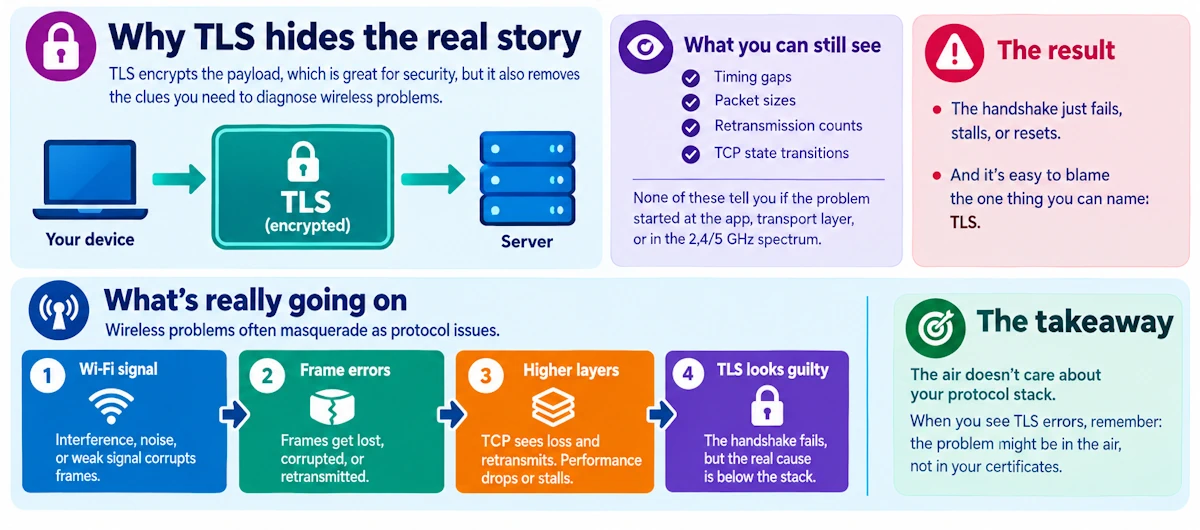
When Encryption Masks the Problem: Troubleshooting TLS Over Wireless Links

Here's a scenario I've seen happen more times than I can count. A handshake fails. Somebody glances at the logs, sees "TLS" in the error, and spends the next three hours fiddling with cipher suites and certificate chains. Meanwhile the actual culprit is sitting eighteen inches away, radiating on channel 6, fighting for airtime with a neighbor's baby monitor.

Read More →
Wi-Fi queues and TCP latency
Bufferbloat · 7 min read

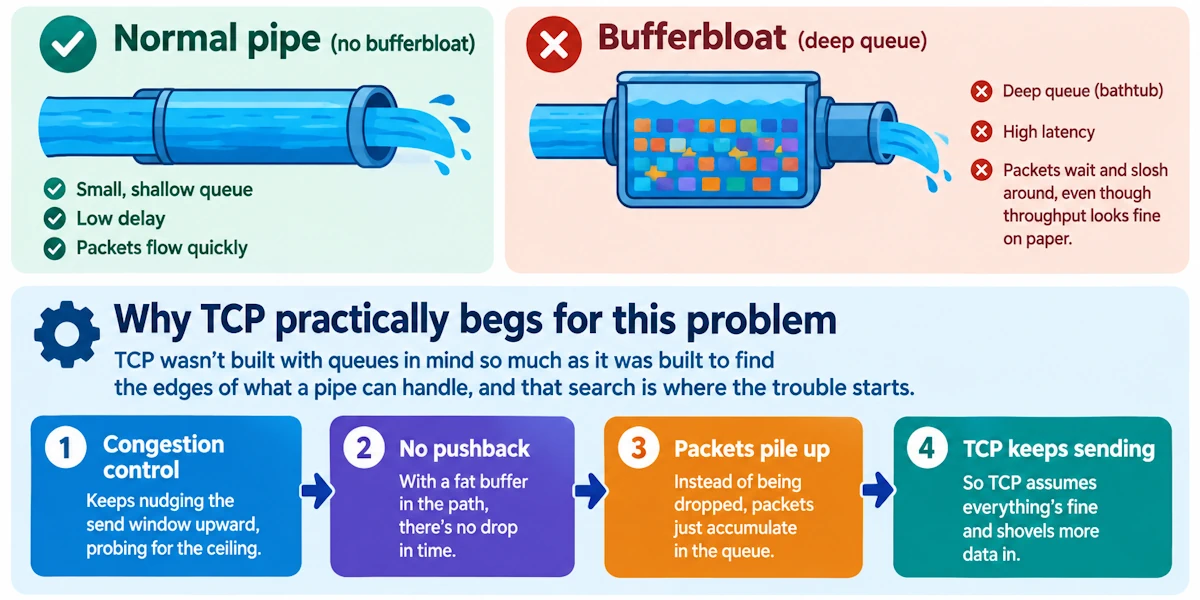
Bufferbloat Exposed: How Wi-Fi Queues Kill TCP Latency and How to Fix It

Your bandwidth test says 400 Mbps. Your video call freezes like a deer in headlights anyway. Something's lying to you, and it's not your ISP - it's the queue sitting quietly between your laptop and the rest of the internet.

Read More
TCP congestion control on Wi-Fi
Congestion Control · 6 min read

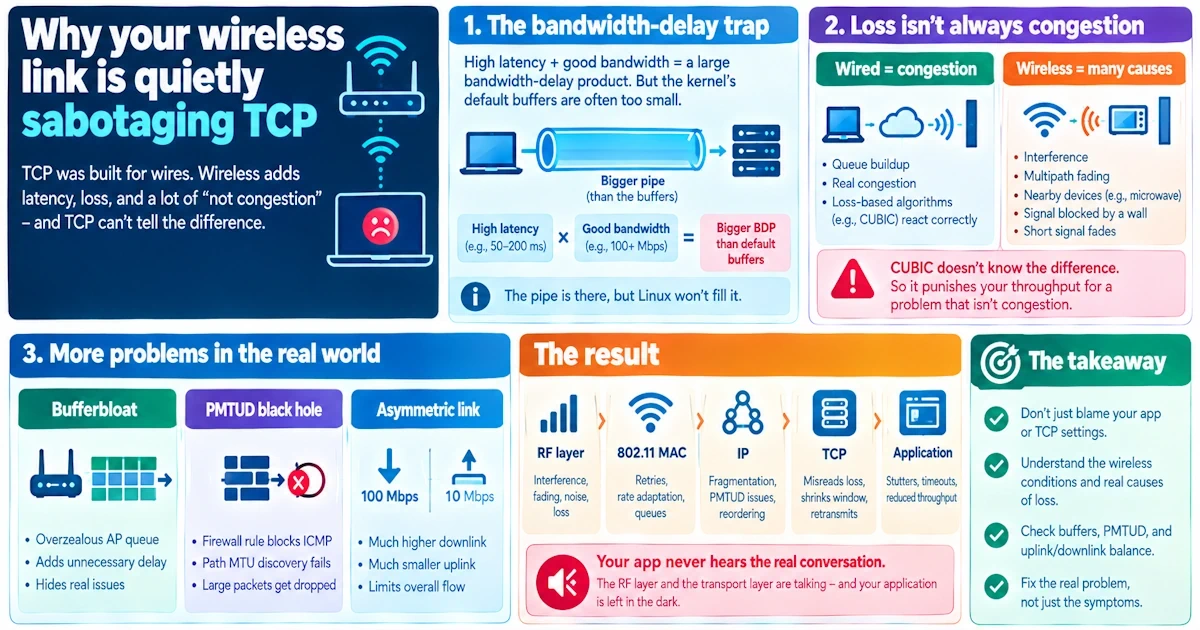
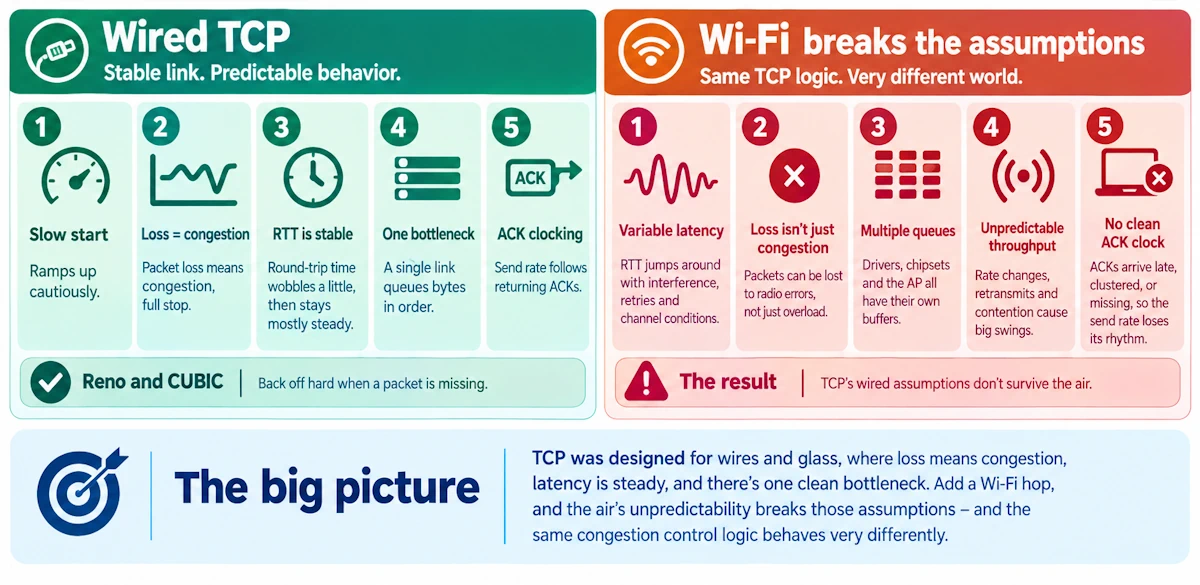
Congestion Control in the Wild: Why Wi-Fi Makes TCP Algorithms Behave Badly

Picture a bulk file transfer. Server's on gigabit fiber, nothing else on the wire, CPU bored stiff. You kick off the copy and watch the throughput graph climb, stumble, climb again, then fall flat on its face for three seconds at a time.

Read More
TCP server surviving Wi-Fi roaming
Roaming · 6 min read

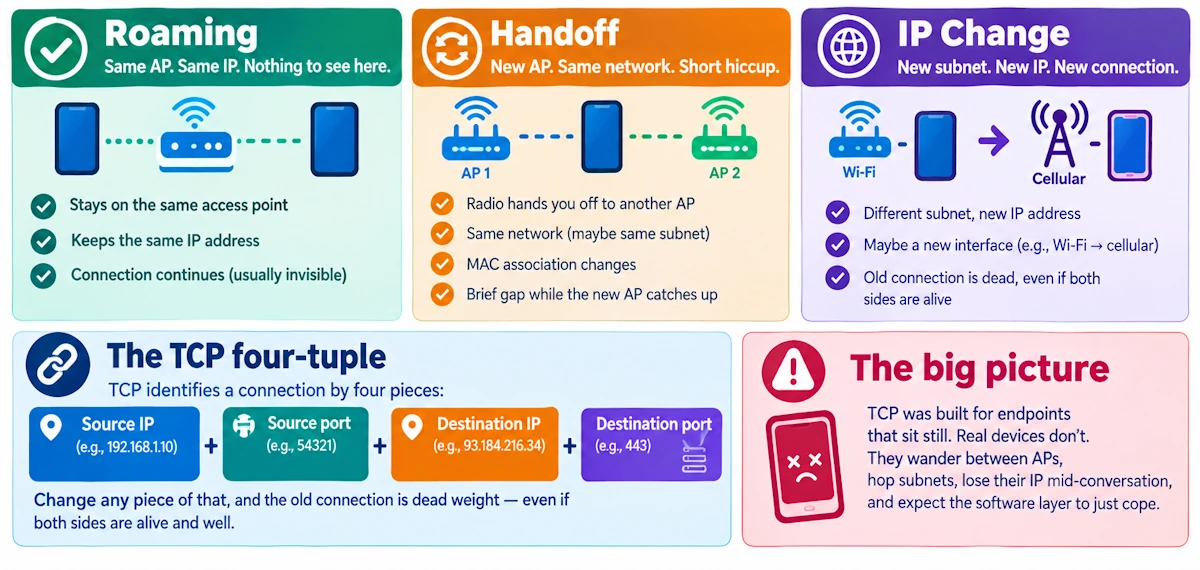
Crafting a Minimal TCP Server That Survives Roaming and Handoffs

Here's a scene I watched play out a hundred times when I still taught RF to engineering students: a phone walks out of one classroom and into the hallway, crosses into range of a different access point, and somewhere in that transition, a perfectly good upload just dies.

Read More
TCP socket to Wi-Fi frame
Network Stack · 6 min read

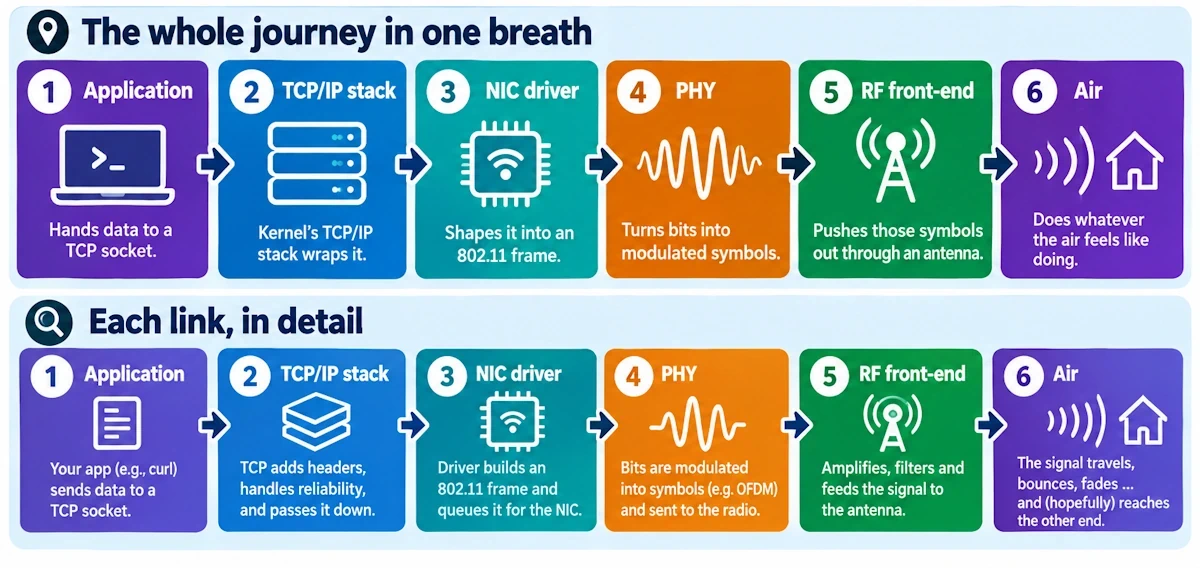
From Bytes to Air: Tracing a TCP Socket All the Way to the Wi-Fi Frame

You type curl example.com, hit enter, and forget about it. Two seconds later a page loads. In between, your one request turned into electrons shoved down a copper trace, then symbols riding a radio wave, then a fading blob of RF bouncing off your kitchen wall. Let's follow one byte, start to finish, no hand-waving. Here's the whole map in one breath: application hands data to a TCP socket, the kernel's TCP/IP stack wraps it, the NIC driver shapes it into an...

Read More
Detecting Wi-Fi co-channel interference
Interference · 6 min read

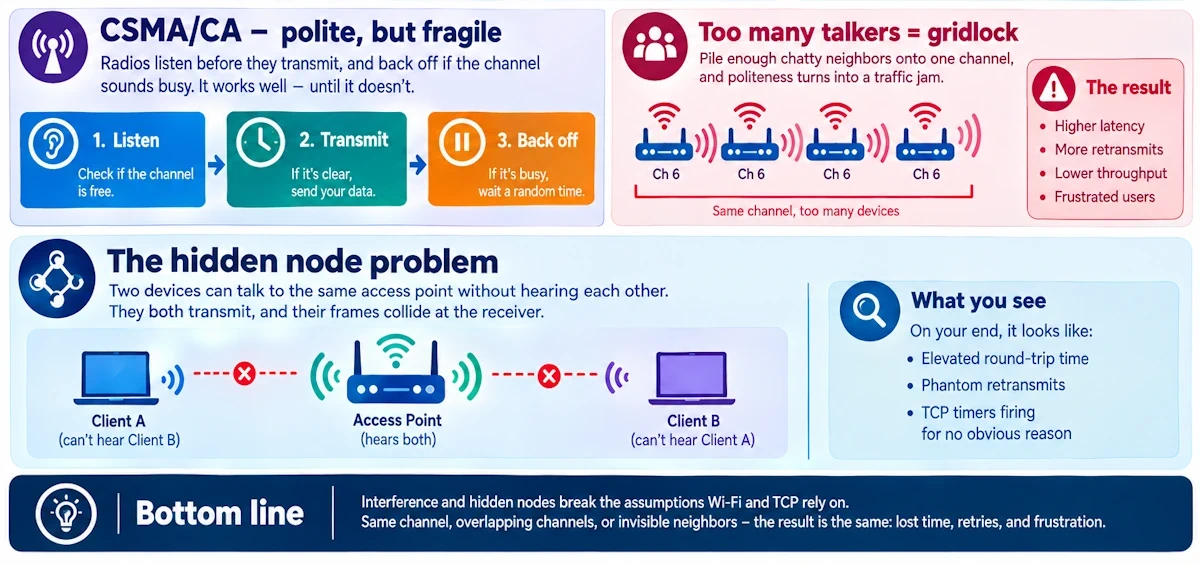
Hidden Wi-Fi Neighbors: Detecting Co-Channel Interference that Breaks Sockets

A neighbor you've never met, running an access point you've never seen, can wreck your TCP sockets from thirty feet away. No malware, no bad code, just radio waves fighting for the same sliver of spectrum. Here's how to catch the culprit tonight, with your own gear and a bit of patience. I once got called into an office where sockets kept dying mid-conversation. Developers blamed the app for three straight weeks.

Read More
Antenna choice and TCP throughput
Antennas · 9 min read

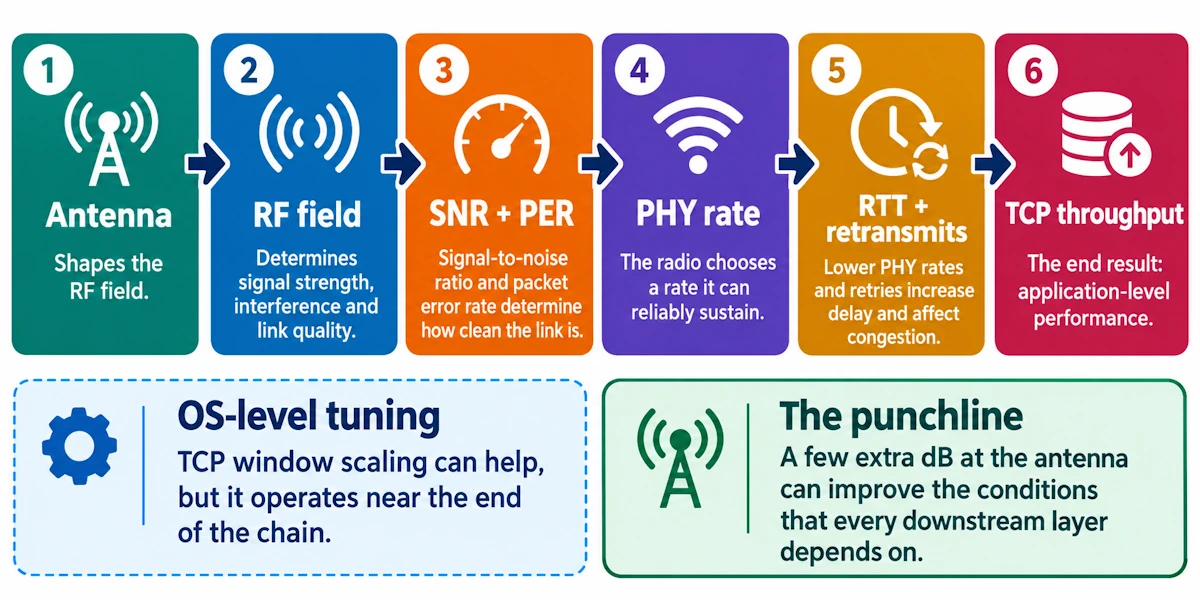
How Antenna Choice Changes TCP Throughput: Patterns, Polarization, and Gain

Your download crawls. You stare at the progress bar, blame your ISP, restart the router, then blame the cloud. Here's the thing nobody tells you in the beginner forums: that stutter might have nothing to do with your provider and everything to do with a two-inch piece of metal sticking out of your access point - the directional WiFi antenna. Antennas shape the invisible field that every packet has to swim through before it ever touches a socket.

Read More
Mobile radio power and TCP
Power Management · 6 min read

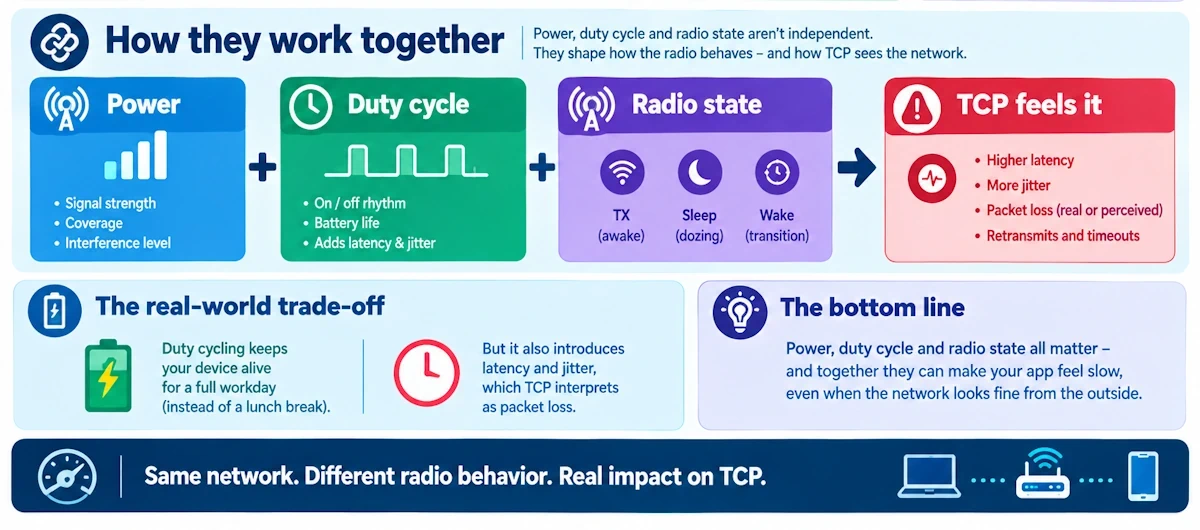
Power, Duty Cycle, and TCP: Managing Mobile Device Radios for Reliable Connections

I once watched a classroom demo go sideways in the most instructive way possible. A phone, mid-stream, went dark on the packet capture for three hundred milliseconds, woke up, and the whole video stuttered like a scratched record. Nobody touched the network. The radio just went to sleep. That's the whole story of this piece: your socket isn't broken; your radio has a bedtime, and TCP takes the blame every single time.

Read More
Antenna placement in home labs
Antenna Placement · 7 min read

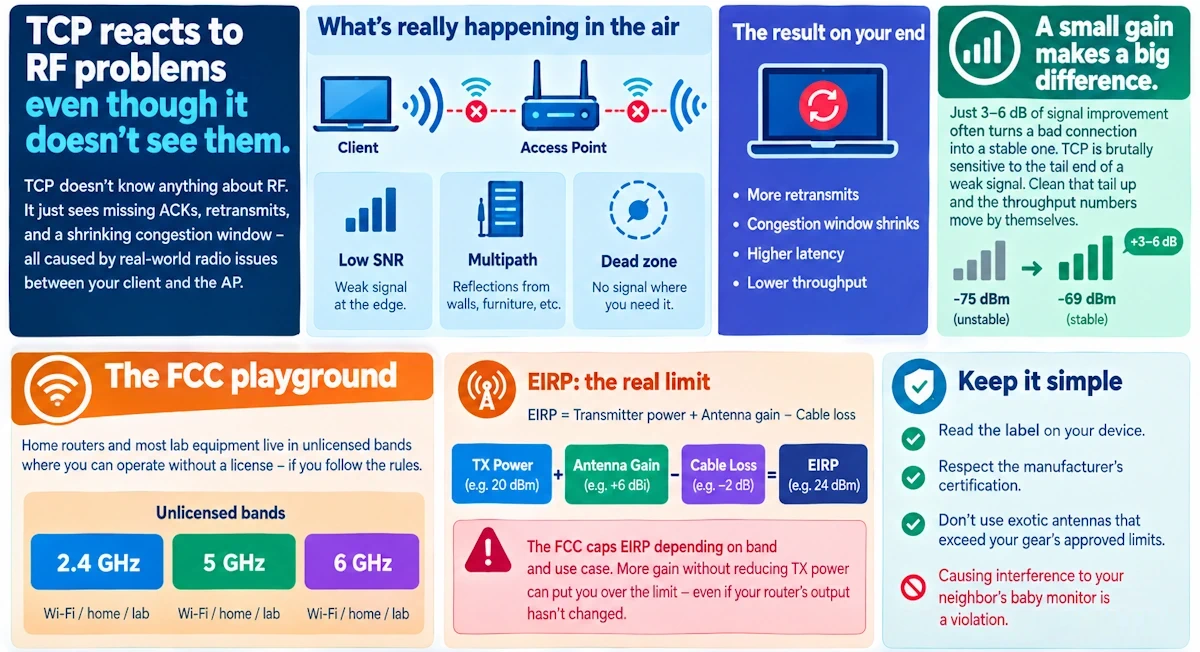
Practical Antenna Placement for Home Labs: Boosting TCP Throughput Without Breaking FCC Rules

Here's what nobody tells you when you buy a shiny new access point: the box doesn't care if you shove it behind a monitor, under a desk, or inside a metal cabinet. It'll still blink green. Meanwhile your TCP flows are choking on retransmits, your congestion window is collapsing every few seconds, and you're blaming the ISP. I've spent decades with a spectrum analyzer in one hand and a coffee in the other, and I can tell you this: move the antenna six inches and watch the goodput jump.

Read More
TCP on 802.11ax vs 802.11ac
802.11ax · 8 min read

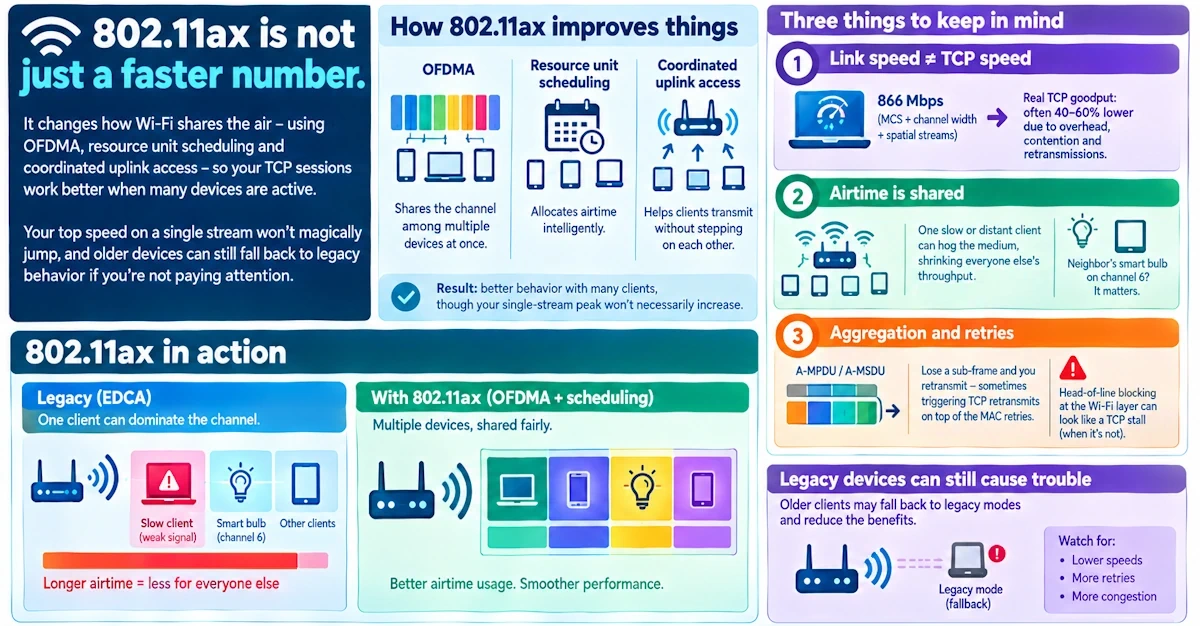
TCP Performance on 802.11ax vs 802.11ac: What Every Developer Should Know

Here's the one-sentence version, free of charge: 802.11ax rewrites the airtime rulebook through OFDMA, resource unit scheduling and coordinated uplink access, so your TCP sessions behave far better in crowded, multi-client environments, but your single-stream peak numbers won't necessarily jump, and legacy fallback behavior will still bite you if you're not watching for it.

Read More
Modern TCP features for wireless
Modern TCP · 5 min read

Teaching an Old Socket New Tricks: Modern TCP Stack Features That Improve Wireless UX

Blame the right culprit for once. That 300 millisecond stall before your video call recovers, that maddening pause before a page finally loads on hotel Wi-Fi, these aren't always signal problems. Half the time they're software problems wearing a signal problem's coat. I've watched the same radio link produce a sluggish mess on one laptop and a snappy sub-100ms response on another - same antenna, same access point, same spot on the sofa.

Read More
Tuning Linux TCP for Wi-Fi
Linux Tuning · 8 min read

Tuning Linux TCP Parameters for High-Latency or Noisy Wi-Fi Links

If you've ever stared at an iperf3 output wondering why your throughput craters the moment someone microwaves popcorn two rooms away, this piece is for you. I wrote it for people who build socketed applications, run Linux boxes at the network edge, or simply refuse to accept "Wi-Fi is just slow" as an answer. You'll need root, a working knowledge of sysctl, and the patience to run a test more than once. That's the whole entry ticket.

Read More
RF causes of TCP retransmits
Retransmissions · 6 min read

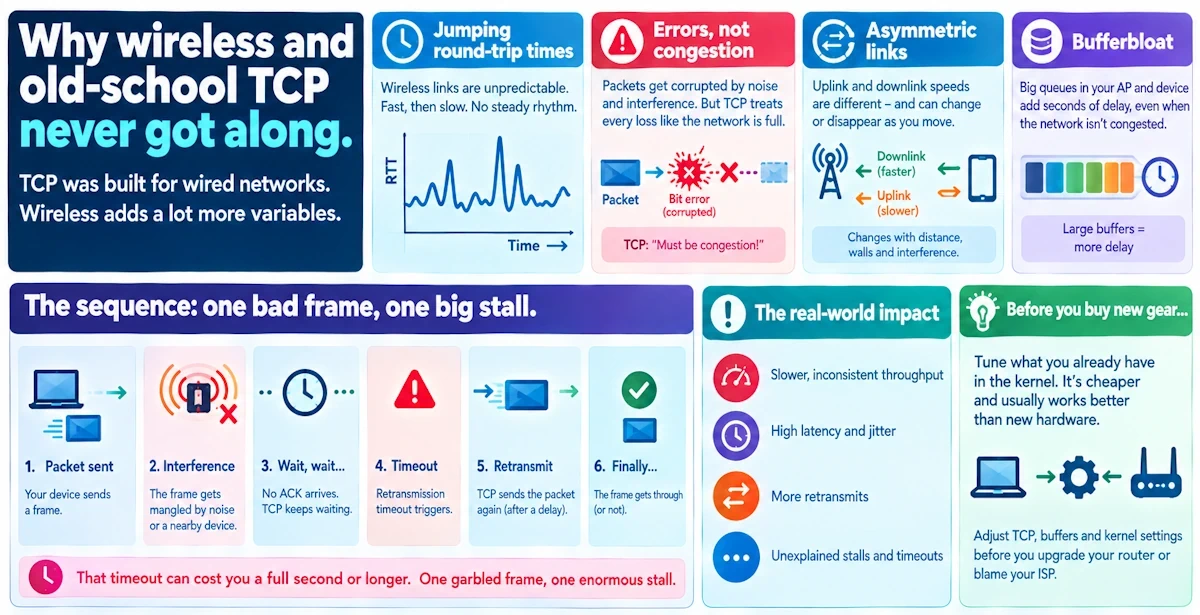
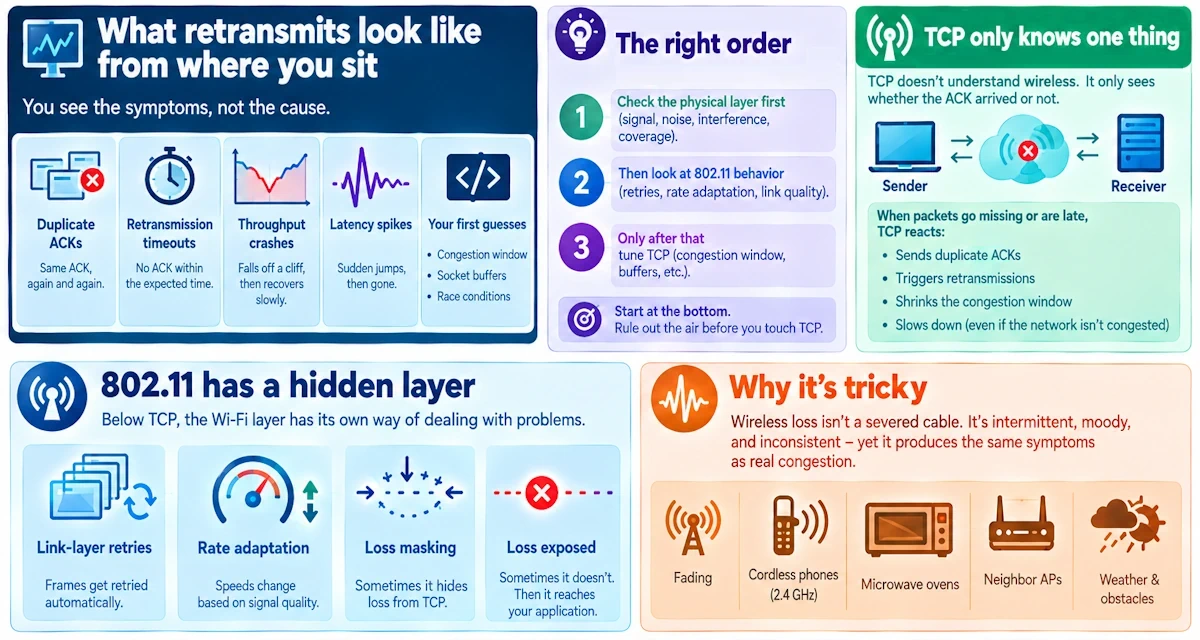
When TCP Retransmits Aren't Your Code's Fault: RF Causes and Remedies

Your socket code might be flawless. Clean handshakes, proper buffer sizing, sane timeout logic. And still the throughput graph looks like a seismograph during an earthquake. Here's the thing nobody tells junior developers in networking bootcamp: the air between two devices is a liar, a cheat, and occasionally a saboteur. I'm going to walk through the practical chain: from what you see at the socket, down through 802.11 frame behavior, into the radio environment itself.

Read More
Diagnosing TCP drops on Wi-Fi
Troubleshooting · 8 min read

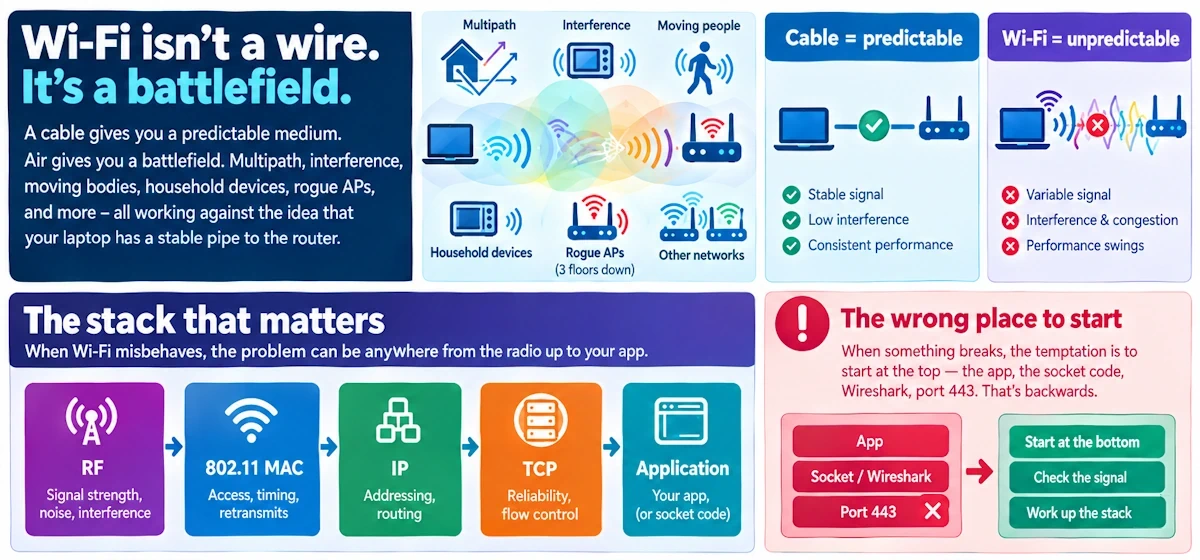
Why Your TCP Connection Dies on Wireless - Diagnosing Real-World Wi-Fi Drops

Cut through the noise. Frames, radios, drivers and sockets are all conspiring against you, and your TCP session is the casualty. Wi-Fi was never meant to behave like a wire. I taught RF for longer than I'd like to admit, and the single lesson that took students the longest to absorb was this one: a cable gives you a predictable medium, while air gives you a battlefield.

Read More
Never miss a post

Subscribe to Keepalive.

New posts, one packet capture and one fix, every other week.